Design - Phlomis - the El Dorado of plants - May 2026
Phlomis is native to Umbria and it should be well known - but it is not. Even to the extent that there is no standard pronunciation of the name. I tend to say ‘flomm - iss’ whilst posh gardening friends seem to say ‘flow- miss’. Who is right?
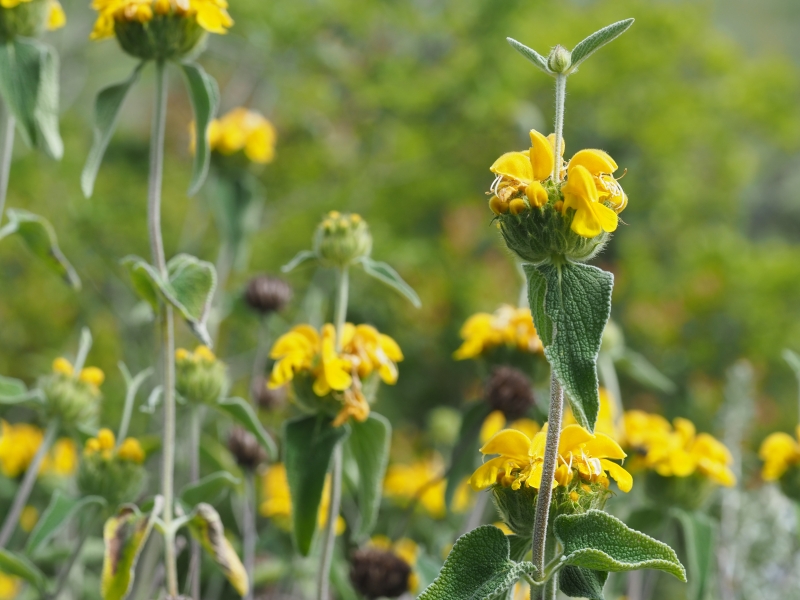
Our local phlomis here in Italy is the bright yellow Jerusalem Sage, Phlomis fruticosa. It grows into a substantial shrub, if you let it. It starts to flower in late April and goes on right through May. A good trim in autumn helps keep it in shape but is not essential. In some years I just cut off the dry flower stalks but in others I have a more drastic assault.
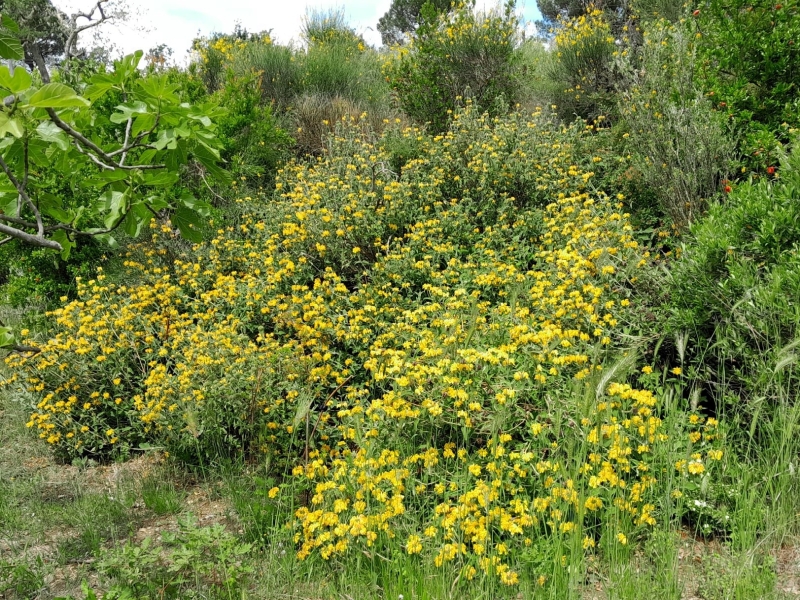
This phlomis self-seeds readily and seedlings pop up all around the garden. In fact it needs keeping in check - there is a massive, spreading colony in the corner of the garden which has rather got the better of me.
The dry seedheads give off clouds of microscopic seeds which are a menace when trying to prune it. I recommend choosing a day when it has rained to keep the dust down, otherwise wear a mask to stop the dust irritating your throat.
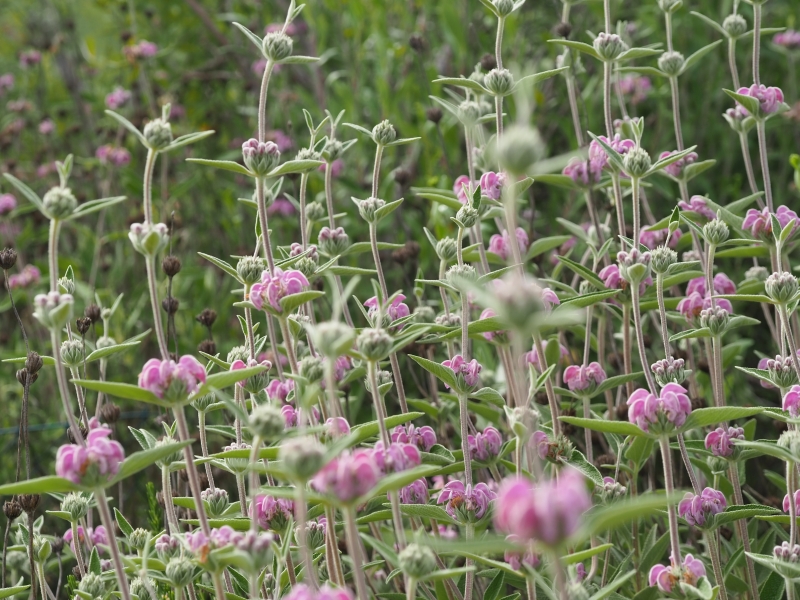
Phlomis is also native to Spain and Portugal, where I have seen it growing wild. But it is pink. Yes, quite a surprise, but the locals think that pink is the normal colour for phlomis. It reminds me of ‘Candide’ (Voltaire), where the hero finally arrives in El Dorado and finds a child playing with stones on the ground that are all emeralds, rubies, diamonds … Candide is astonished and starts to gather up the precious stones when the child’s mother comes out and admonishes him for playing ‘in the dirt’ and hurries him indoors. It is all a matter of what we are used to. And as Candide says at the end of the book: "we must cultivate our garden" (il faut cultiver notre jardin).
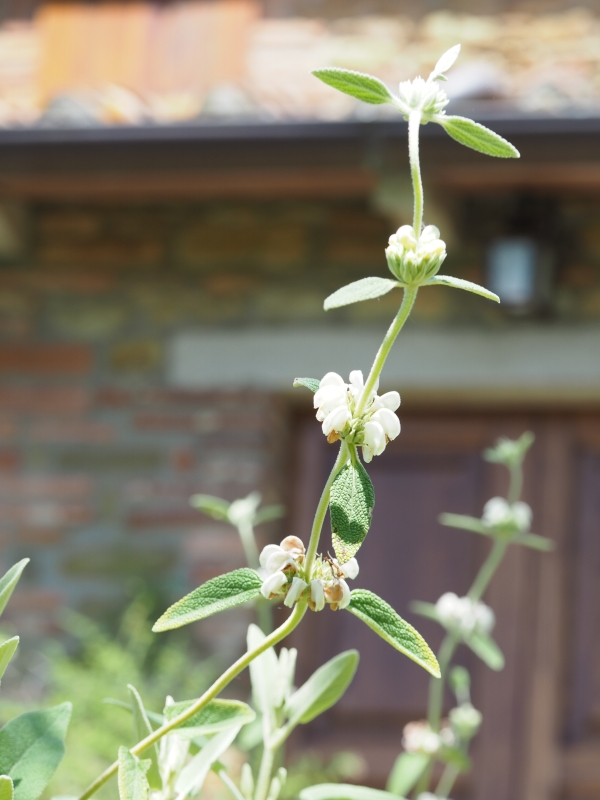
This white form ‘Alba’ is also native to Spain and Portugal but I have not seen it in the wild. It is an elegant, cool colour (and difficult to capture in a photo). Both the basic pink and this white form of Phlomis purpurea have rootstock that spreads slowly by suckers and the plant eventually forms a ground covering mass. Digging up clumps of roots in autumn and putting them in pots easily makes new plants.
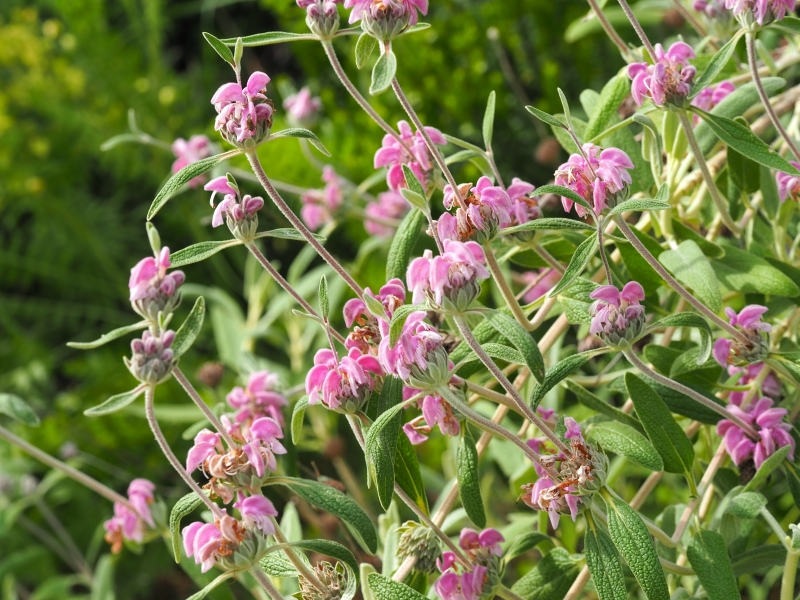
Another pink form, Phlomis italica is native to the Balearic islands (not Italy, despite the name). It is not quite so cold resistant as Phlomis purpurea and does not have suckering growth, it is a lighter shrub. This type starts to flower a little earlier in spring too. Some gardeners find that this form is too ‘floppy’ for their taste but I rather like it.
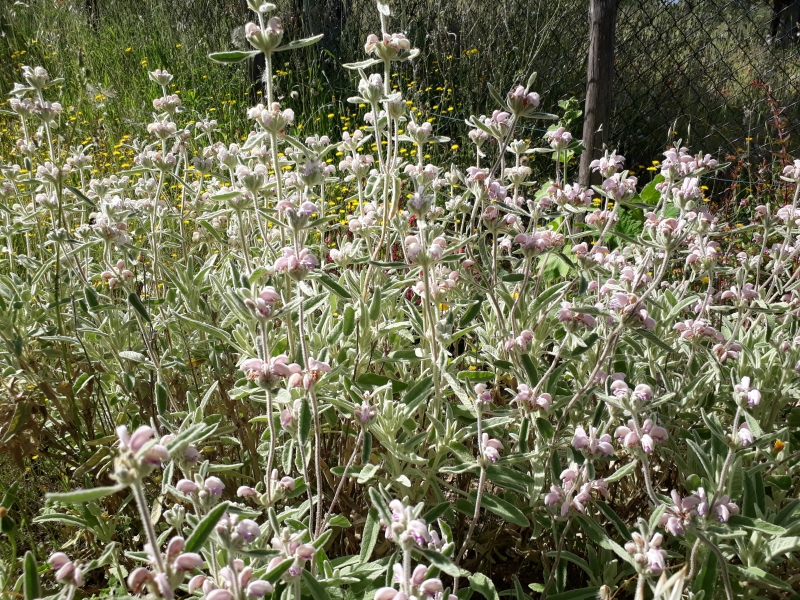
A gentle pink flower with pale leaves, Phlomis ‘Marina’ is a hybrid between Phlomis purpurea and Phlomis italica.
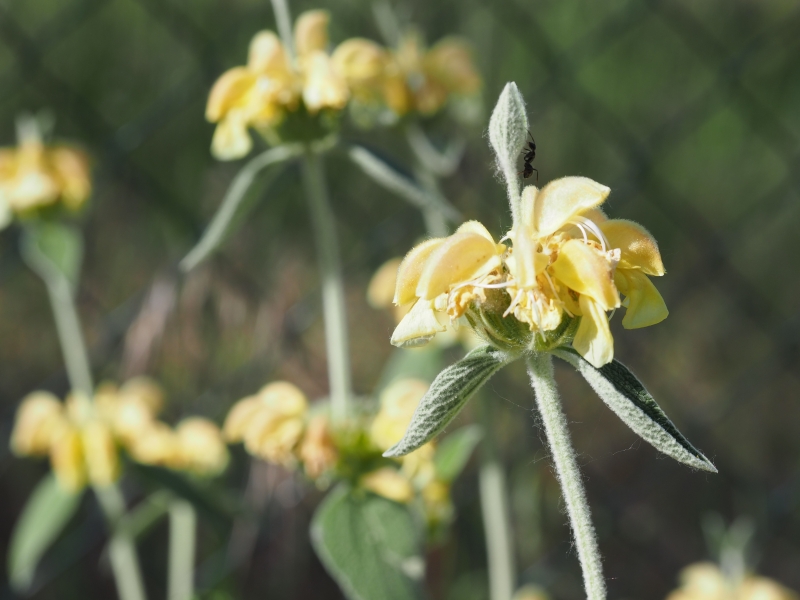
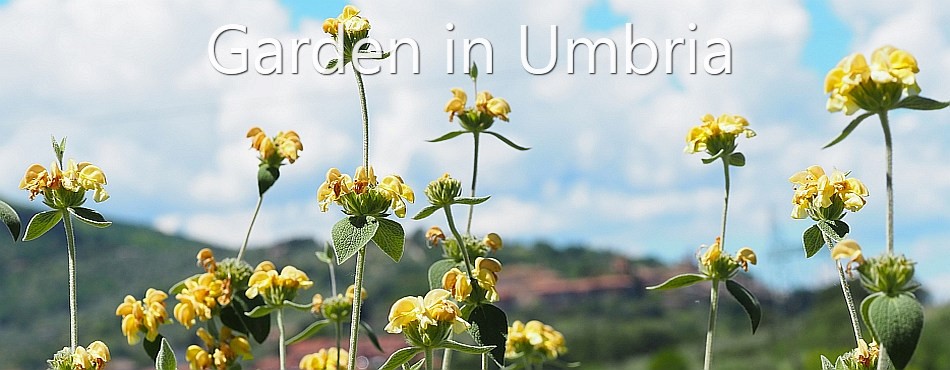
A gentle shade of yellow and a lot easier to use in garden design than the sharp yellow Phlomis fruticosa; Phlomis ‘Le Chat’ is a hybrid between Phlomis purpurea and Phlomis crinite (this latter one I have never seen but I suppose it must be yellow). The shrub is usually quite compact but this year the spring rainfall has caused it to grow much taller. (See also the photo at the top of this page).
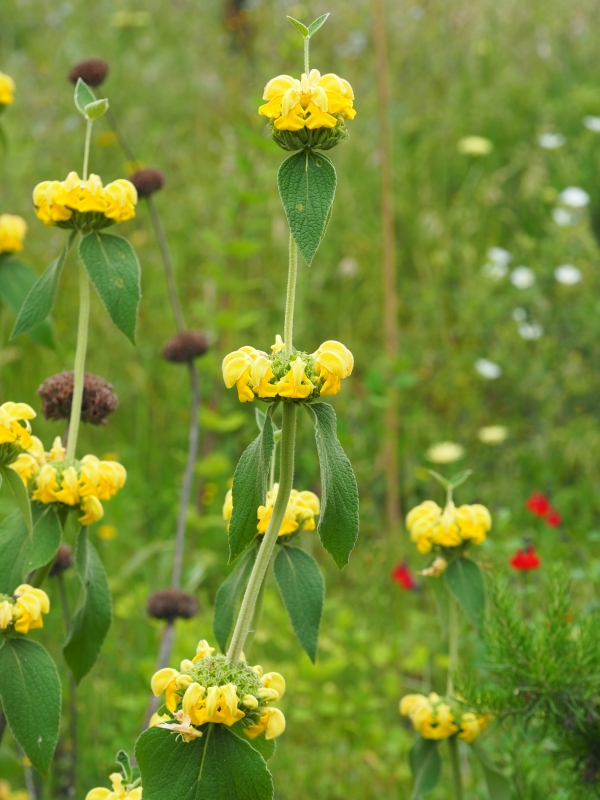
A rather different style of phlomis is Phlomis russeliana. Native to Turkey, the foliage is broader and a lighter shade of green. The flower stalks are tall and held high about the leaves – lending a very ‘designer’ touch to the border. It is not quite so resistant to drought but it can take some shade and will withstand cold temperatures.
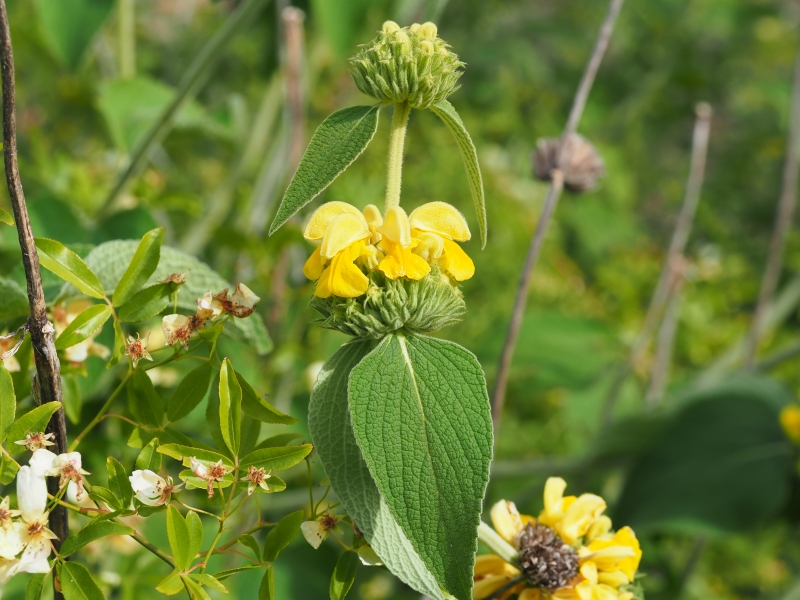
This hybrid between P. fruiticosa and P. russeliana is an even more stylish phlomis and it has very attractive, large flowers which are shaded from pale to dark yellow, standing tall above the leaves to show off to an advantage. Highly recommended.
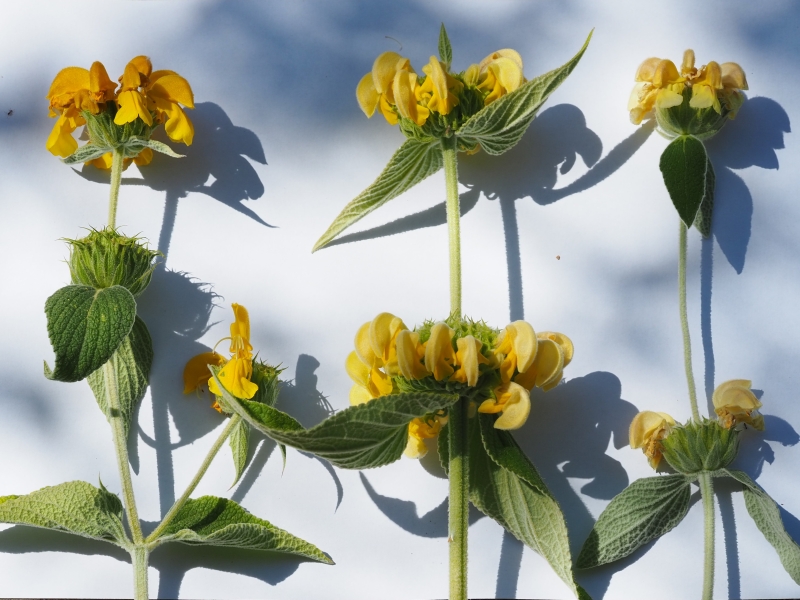
In case these yellow phlomis are starting to all sound the same, here is a comparison between (from left to right): Phlomis fruticosa, Phlomis ‘Edward Bowles’ and Phlomis ‘Le Chat’.
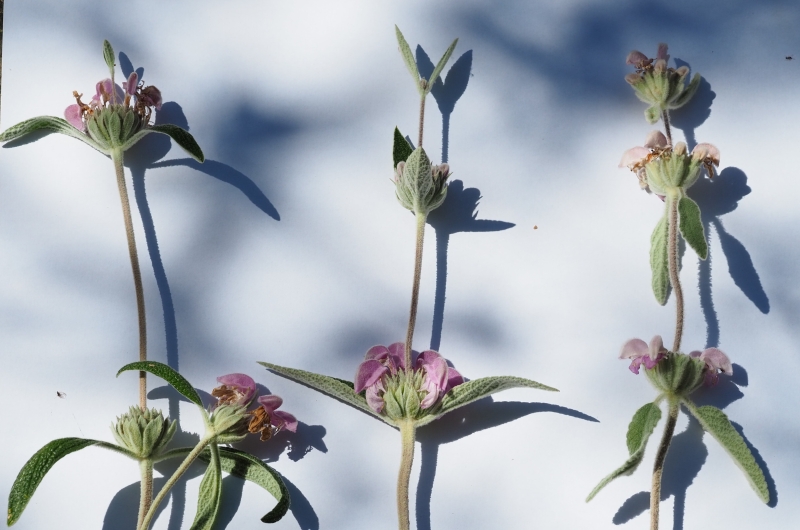
And here is a comparison between three pink forms (from left to right): Phlomis italica, Phlomis purpurea and Phlomis ‘Marina.
The photo at the top of this page shows phlomis albidus blooming in May
Many of these articles first appeared in the Castiglione del Lago monthly newsletter “Qua e là” edited by Priscilla Worsley
All text and photographs © Yvonne Barton unless stated otherwise